... The Strange Reincarnation of Lucinda Tarne
While Professor Pinter graded stacks of exams, Gerry worked through the calculations of the Linear Algebra make-up and filled in his own blue book at a corner desk by the window. It was a mechanical task once you learned the steps, better done by an algorithm than a human, but Gerry understood you have to pay your dues before you could take shortcuts.
Linear algebra appears in TSROLT as part of the standard mathematical foundation for computer science. It involves vectors, matrices, and transformations — the tools used in algorithms and machine learning. The novel references it only as coursework, not as a topic of explanation.
The Professor found the answer key and looked up to see Gerry staring at the poster.
“You’re not ready for that yet,” he said. “Schroedinger’s equation is a time dependent linear partial differential equation.”
“Look up quantum wave function collapse and free will choices. There’s an interesting connection between linear algebra and philosophical reality.”
“Yes, sir.”
Schrödinger’s equation is a fundamental equation in quantum mechanics describing how quantum states evolve over time. In the novel, it is mentioned only as something Gerry is “not ready for,” signaling its mathematical depth without teaching it.
Professor Wulshnik asked, “What do you think is more computationally intensive, high-level reasoning or low-level sensorimotor skills? I’ll wait for your answers.”
The lecture software required students to type in their answers, to get full participation from the audience. Stuart tapped his screen, eyes half closed. The results showed up on the classroom screen behind the Professor.
Professor Wulshnik pointed. “As I expected. Most of you are wrong. That is called Moravec’s Paradox.”
The iCub lecture introduces real AI terminology: Moravec’s Paradox (the idea that low level skills are computationally hard), Markov chains (probabilistic state transitions), fuzzy logic, and other components of machine learning.
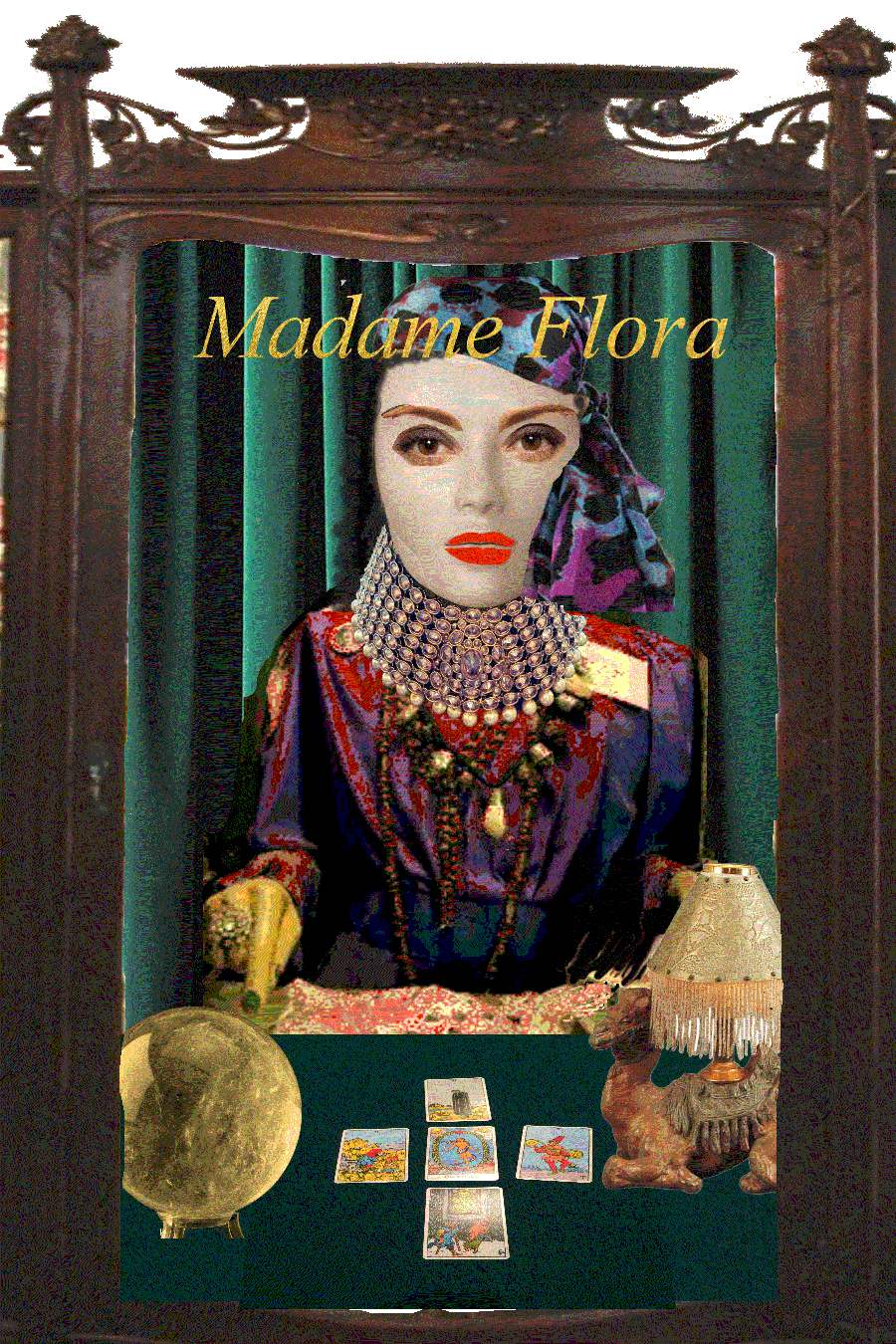
“We do tarot readings. Image analysis for the cards. Speech and speech recognition for communicating with the customer. Robotics to make her more believable and let her deal the spreads. Her movement was quite restricted when I found her. Completely mechanical. Now, she’s driven by the artificial neural networks.”
Artificial neural networks (ANNs) are computational systems inspired by biological neurons. In TSROLT, they are used to give Madame Flora perception, speech, and simple reasoning.
... Wonderball Apocalypse
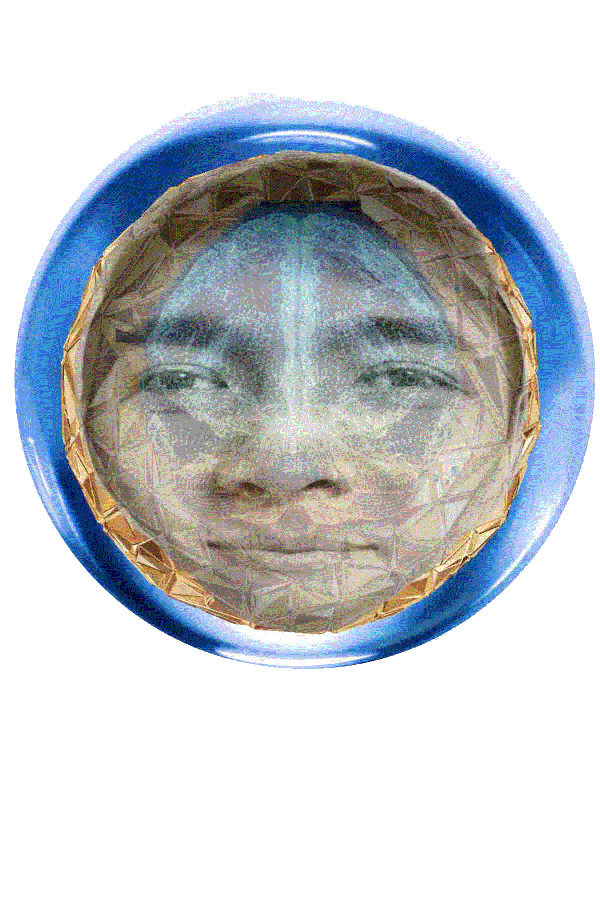
“Maybe in this state he is closer to enlightenment, without physical sensations to distract him?”
Gerry stared at the Buddha.
“I can only imagine what your food tastes like,” Gerry said. “I don’t like seeing the smoking candles and being unable to smell them.”
(Chapter 11)
Haptics research focuses on giving machines and virtual agents a realistic sense of touch through force feedback, vibration patterns, and tactile simulation. Current systems combine wearable devices, soft robotics, and high resolution sensors to reproduce pressure, texture, and motion with increasing fidelity. Advances in neuro haptics explore direct stimulation of nerves to restore sensation for prosthetics or enhance immersion in virtual environments. Across robotics, VR, and human–machine interaction, the trend is toward richer, more naturalistic touch feedback that supports fine motor control and embodied cognition.