... The Strange Reincarnation Of Lucinda Tarne
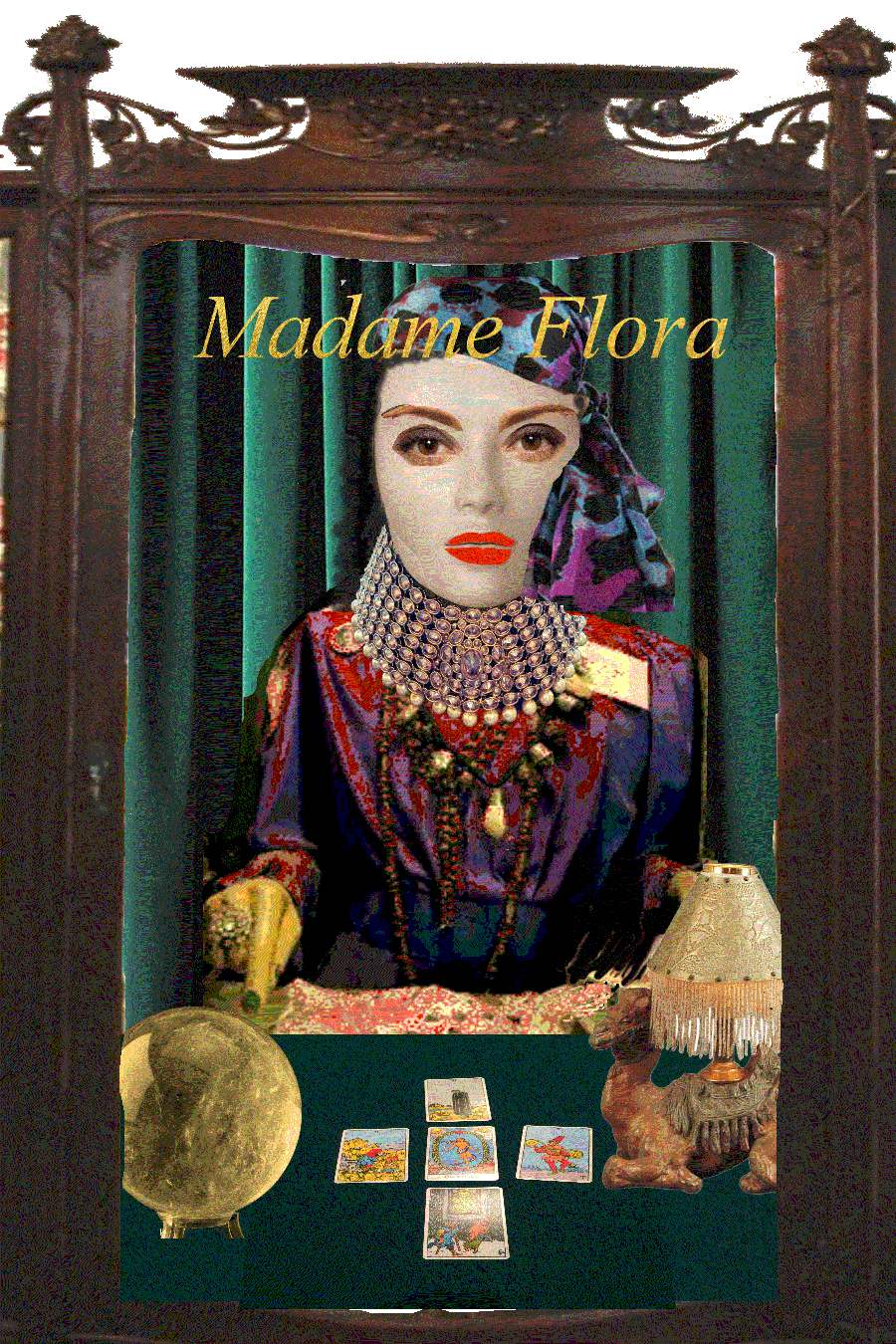
“Is she pregnant?” Auntie asked.
“No,” Gerry glared at his aunt, “just back from the dead.”
Well, that was a conversation starter. A conversation that lasted the rest of the evening and covered karma, transmigration, consciousness, the soul, Samsara, Nirvana, morality, suffering, and more. He had not talked about religion with them for years. It surprised him how much they knew. If his future life depended on his present life, and he could choose what kind of life he would live next time, he should have paid his taxes. But he wanted to clear his student debt first. The world had so much evil because reincarnation cycles were shorter for lower souls and they were more deeply attached to this existence.
Reincarnation in Buddhism:
In Buddhism, reincarnation is understood as the continuation of consciousness through a cycle of rebirth driven by karma—the moral consequences of one’s actions. This process, called samsara, is not the movement of a permanent soul but the unfolding of causes and conditions that give rise to a new life. Liberation comes through awakening, which ends the cycle of rebirth entirely. Different Buddhist traditions vary in how they describe the mechanics of rebirth, but all treat it as a natural process governed by ethical causation rather than divine judgment.
Other religions:
Hinduism also teaches a cycle of rebirth, though it includes an enduring self (atman) that moves from life to life. Jainism emphasizes reincarnation shaped by strict nonviolence and karmic accumulation. In contrast, most Abrahamic religions—Judaism, Christianity, and Islam—teach a single earthly life followed by resurrection or an afterlife rather than repeated rebirth. Some smaller traditions, such as certain forms of ancient Greek philosophy and modern New Age movements, include their own versions of reincarnation or soul migration.
Contemporary discussions of personhood focus on what it means to be a conscious, autonomous individual and how we distinguish human intelligence from artificial systems. Philosophers and cognitive scientists examine traits such as self-awareness, intentionality, moral agency, and the ability to understand others’ perspectives. These debates are not tied to any single religion, but they influence modern views on identity, ethics, and the boundaries between humans and machines. In practical terms, questions about “what counts as human” now appear in fields ranging from artificial intelligence to law and psychology, where they guide how we interpret behavior, responsibility, and social interaction.
Tarot cards originated in 15th-century Europe as a card game, but by the 18th and 19th centuries they were adopted into Western occult traditions as tools for symbolic interpretation and divination. In this context, the cards are not treated as a religion but as part of a broader esoteric framework that uses imagery, archetypes, and correspondences to explore psychological or spiritual questions. Modern practitioners vary widely in belief: some view Tarot as a reflective tool similar to guided introspection, while others see it as connected to mystical or intuitive insight. Despite these differences, Tarot’s role in contemporary culture is largely symbolic rather than doctrinal, functioning as a flexible system for meaning-making rather than a formal belief structure.
... Wonderball Apocalypse
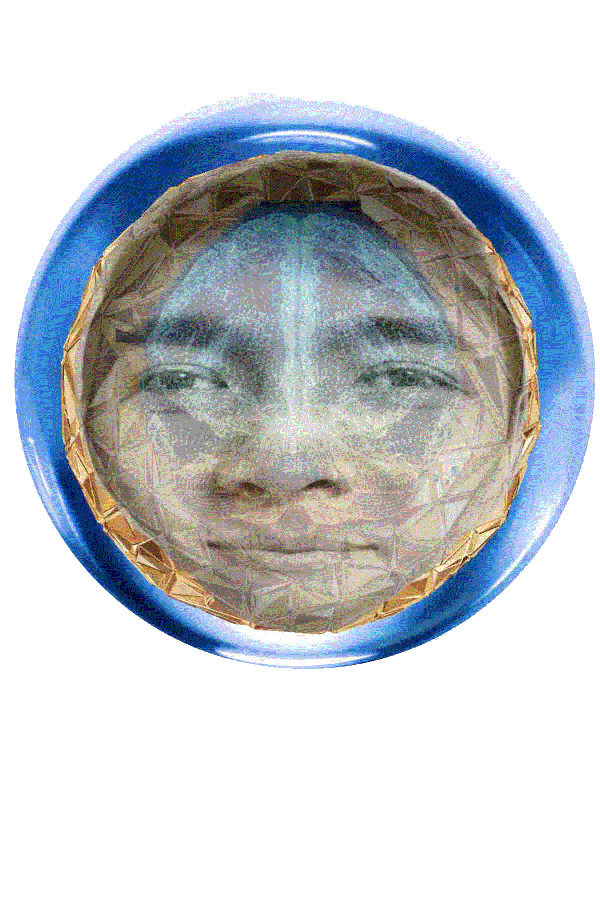
When Mustafa put the bag down and unzipped it, Gerry was on a prayer rug inside a warehouse that had been turned into a mosque. Mustafa was in the last row, alone. Gerry saw a scattering of men before him, but the bag kept anyone from noticing him.
“Do you need to pray?” Mustafa whispered.
Mustafa must think that the soul of the Imam was still in control of the Wonderball. So the answer was obvious. An Imam would pray. But, maybe not. A soul that was returned from heaven might have different religious duties as a new prophet for the faithful. The problem was that none of the new souls remembered heaven, or hell. They had nothing to reveal.
(Chapter 9 Jihad)
Islamic teaching frames the afterlife as a continuum of the soul: death marks the soul’s separation from the body and its entry into Barzakh, an unseen interim state where it awaits the Day of Judgment, when all humans are resurrected and held accountable for their deeds. The righteous are rewarded with Jannah (Paradise), a realm of eternal peace, while the wicked face Jahannam (Hell), a place of punishment. This entire structure emphasizes moral responsibility, divine justice, and the idea that earthly life is a test whose results unfold eternally.
The jihadi militants of the New Alliance who have taken Gerry’s Wonderball from Bucharest to the mountains of Pakistan believe the Wonderball is a **jinn container** or a **spirit vessel** that can be “possessed.” They assume the “Imam” inside Gerry is real — a literal returned soul. They want **Mohammed himself** to appear inside the Wonderball. Not metaphorically. Not symbolically. They want the Prophet to *reincarnate* into the device. A returned Prophet would legitimize their cause. He could unify the faithful. He could raise an army. He could declare jihad with divine authority.
They are **literalists** expecting prophecy, signs, and divine intervention to be concrete and mechanical. They treat technology as a **religious artifact**, not a tool. They believe martyrdom, prophecy, and eschatology can be **engineered**. Their worldview cannot accommodate ambiguity — so Gerry becomes whatever they need him to be. They assume the Wonderball is. They believe Gerry’s ability to project faces and speak languages is **supernatural proof**.
Gerry fakes the “identity reset” interface to manipulate Mustafa. Mustafa believes it. The warrior believes it enough to escalate. The Khan believes it enough to test him. This is why they drag him up the Karakoram Highway: They think they’re escorting a **potentially world changing religious weapon**. When Mustafa cannot reproduce the “summoning,” the jihadis grow frustrated and begin torturing the other Wonderballs. They try to force the spirits out, attempting to “clear the vessel” for Mohammed. This is not theological exploration — it’s fanaticism mixed with superstition and technological ignorance.
Gerry sees how easily humans project **religious meaning** onto him. He sees how dangerous it is when belief, technology, and desperation combine. He witnesses the suffering of other Wonderball souls as they are tortured and feels responsible.
Chodak remained with Gerry. They sat in silence as prayers were chanted in a back room. The boy seemed calm and self assured, not uneasy or nervous.
At last, Chodak spoke. “You are the first Bodhisattva I have met. That I know of.”
“I’m not sure what that means, but I hope I don’t disappoint you.”
“A Bodhisattva chooses to be reborn, to experience the pain and suffering of the world, in order to help other beings attain enlightenment.”
He had not chosen to experience pain and suffering, and he had no enlightenment to share, but the boy sounded certain.
“Ah,” Gerry said. “That’s not quite my situation.”
(Chapter 11 The Shangri-La Confessions)
In Tibetan Buddhism, the *bardo* is a transitional state between death and rebirth, where visions are shaped by one’s own mind, and liberation is possible if one recognizes the nature of consciousness.
When Gerry is brought to the monastery, the monks try to interpret his Wonderball realm as a transitional hallucination. Gerry realizes his Wonderball state is *not* a hallucination, but he sees the structural similarity to a bardo: a liminal cognitive space where identity is malleable. This encounter gives Gerry the conceptual vocabulary to understand why some Wonderballs dissolve, some stabilize, and some go mad — they are failing or succeeding at “recognizing the light.” Gerry considers his role might be to guide others through a dangerous in between state toward reintegration.
A pair of bees buzzed the man’s face and he jerked back, but kept hold of Gerry. While the bees explored the interior of his van the man waited patiently for them to leave. Bumper stickers covered rust spots on the inside. One said, “Accept transience, the inevitable, and the irrevocable. Change exists in everything.” Another said, “A thing of little value to oneself may be a priceless treasure to another.”
(Chapter 13 Springtime on the Silk Road)
In Daoism, death is viewed as transformation, the spirit returning to the flow of the Dao, no fixed self, no permanent soul. Death is a natural rebalancing, not a tragedy. The truck driver, Lao Zhou, whose job is to deliver Little Comrades back to the Communists, sees Gerry’s crystal body as simply another phase of qi.
Gerry learns that identity is not a fixed point but a pattern that can reconfigure. This legitimizes his ability to rebuild a body and operate through multiple forms. Daoism gives him the first hint that the Wonderballs are not “broken souls” but misaligned flows that can be guided back into harmony. This is Gerry’s first moment of “ministering” — he helps the confused Wonderballs stacked in the back of the truck to calm down by mirroring Lao Zhou’s teaching.
Reincarnation?
... what if this could really happen? Well, it would prove there is an afterlife, but it says nothing about what that afterlife would be like. Also, I never said for sure what happens to a soul that no longer lives inside a Wonderball. Could they return again? Then there's the issue of traditional thought about reincarnation. If a soul can be reincarnated many times, which version is captured in a Wonderball? Does this imply a soul gets only one life? ... in this reality? Maybe there is another book in this somewhere ...