... The Strange Reincarnation Of Lucinda Tarne
Frankenstein endures because it isn’t really a monster story—it’s a meditation on creation without foresight, the moral cost of innovation, and the loneliness of a being brought into the world without a place in it. Mary Shelley wrote it at nineteen, yet she anticipated modern anxieties about artificial life, scientific overreach, and the responsibilities owed by makers to their creations. The novel’s influence runs through every later narrative about engineered beings—from androids to clones to neural constructs—because it established the template: the created thing is never the true horror; the horror is the creator’s failure to imagine the consequences of their own brilliance.
(Chapter 5)
“It’s like a gunfight, whoever shoots first ...”
“I told you it wasn’t a team game,” Margaret said.
“It’s a lottery. Everyone pays a little and hopes to win the jackpot.”
“Sounds like Blade Runner and the replicants.”
“Yeah, but no guns.”
“We just think them to death?”
“Not just them. Each other too.”
Blade Runner’s Voight Kampff test crystallized a modern anxiety: if machines can mimic us perfectly, what counts as “real” humanity? The test measures involuntary emotional responses—micro expressions, pupil dilation, autonomic flickers—to questions designed to provoke empathy. Its power isn’t in the gadgetry but in the premise: that empathy is the last defensible boundary between human and artificial life. Ever since, the Voight Kampff has become shorthand for the fear that our creations might pass as us, and for the deeper fear that we might fail our own test.
BattleBots turned competitive robotics into a mainstream spectacle, framing engineering as a contact sport long before AI labs made headlines. The show’s arena—where remote controlled machines clashed with saws, hammers, and spinning drums—made mechanical design, strategy, and failure modes visible to a mass audience. Its real legacy isn’t the destruction but the democratization of robotics: it inspired a generation of students, hobbyists, and engineers to treat building machines as creative play, and it established the idea that personality can emerge from hardware alone, even without intelligence behind the eyes.
“She had seen them once in Albany. But these were more colorful than those. Why did she know their meanings?”
(Chapter 16)
Tarot entered modern pop culture less as a mystical oracle and more as a flexible storytelling engine — a portable set of archetypes that writers, filmmakers, and game designers use to signal fate, identity, and psychological tension. The familiar Rider–Waite–Smith imagery (1909) became the visual grammar of Tarot in movies, TV, and comics, where cards like Death, The Lovers, or The Tower function as instant narrative shorthand. In science fiction and fantasy, Tarot often stands in for pattern recognition itself: a symbolic system humans use to impose meaning on chaos, or a mirror that reveals more about the reader than the cards. Its endurance in pop culture comes not from prophecy, but from its ability to dramatize choice, consequence, and the hidden logic of character.
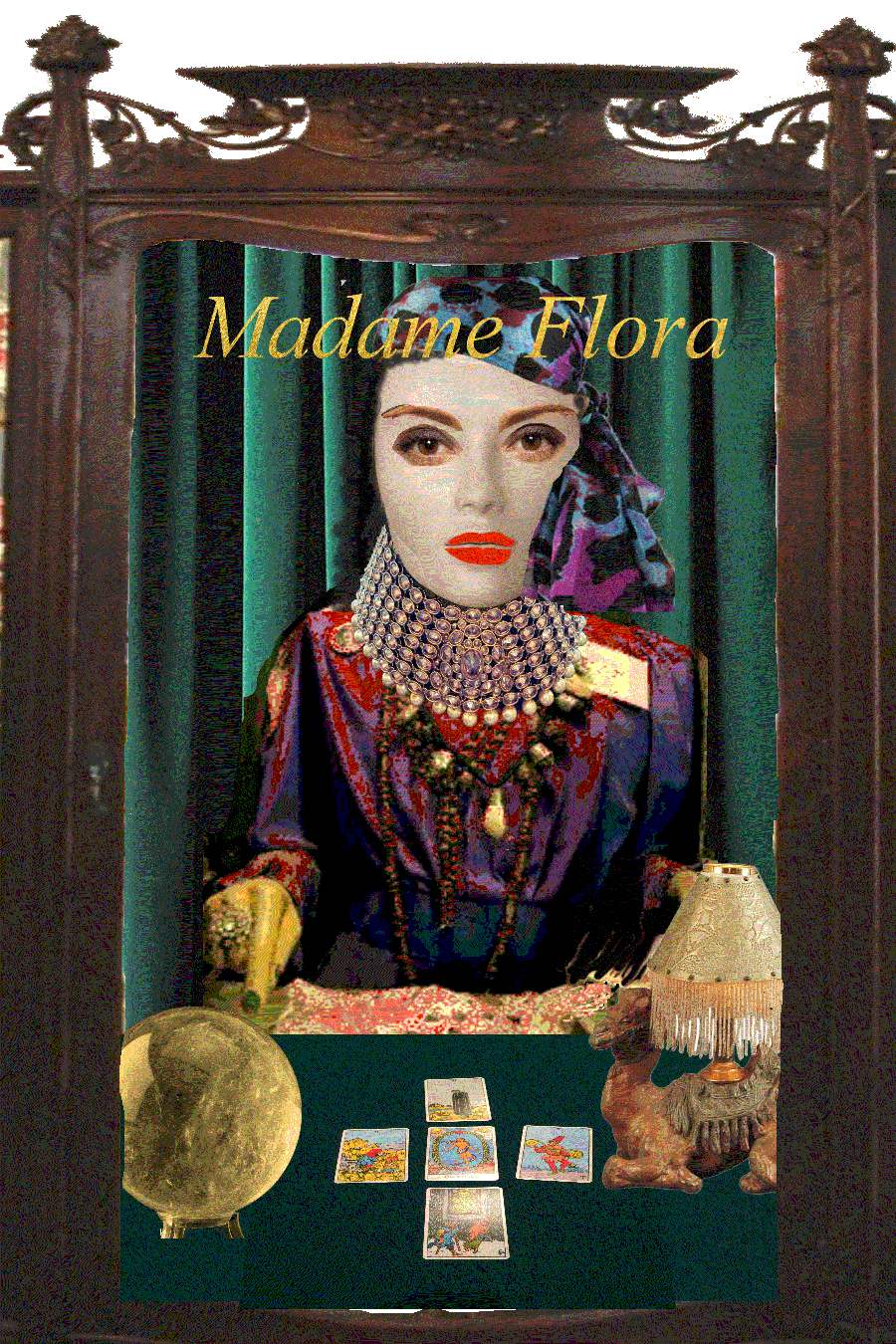
“Madam Flora rose from the depths as if returning from the underworld.”
(Chapter 3)
Mechanical fortune teller machines were a staple of American boardwalks, carnivals, and penny arcades from the early 1900s through the 1960s. Companies like Mills Novelty, Williamson, and Roover Brothers produced iconic figures such as Princess Doraldina, Madame Zita, Esmeralda, and later the more theatrical Zoltar. These machines combined simple clockwork robotics, coin operated mechanisms, and theatrical staging—velvet curtains, crystal balls, tarot cards—to create the illusion of a supernatural encounter. Their popularity came from the blend of spectacle and automation: a mechanical body performing a ritual of insight. In pop culture, they became symbols of fate, chance, and the uncanny boundary between machine and mystic—exactly the lineage that leads to Madame Flora.
“He had written the assignment on The Monkey’s Paw, and done the reading, so he might as well go…”
(Chapter 5)
W. W. Jacobs’ The Monkey’s Paw endures because it distills a universal fear: that desire, once granted, reveals its hidden cost. The story’s power isn’t in the supernatural talisman but in the idea that human wishes are always entangled with unintended consequences. In modern culture it has become shorthand for the danger of getting exactly what you asked for — a narrative warning about agency, fate, and the price of intervention. In TSROLT, its influence is felt in the tension between choice and consequence, and in the way characters confront the outcomes of their own actions, whether they meant them or not
“Let me introduce you to Isaac. As in Asimov, if anyone out there doesn’t get the connection.”
(Chapter 5)
Asimov’s Three Laws became the closest thing pop culture has to a secular scripture about machine behavior. Introduced in the 1940s, they framed robots not as monsters or miracles but as engineered moral agents—machines bound by rules meant to protect humans, obey commands, and preserve themselves in that order. Over time, the Laws evolved from simple plot devices into a cultural shorthand for the ethics of artificial intelligence: how we constrain our creations, how they interpret those constraints, and what happens when rules collide with reality. Even for readers who’ve never opened I, Robot, the Laws linger in the background of every conversation about AI safety, autonomy, and trust. In TSROLT, they echo through Gerry’s education, shaping the intellectual atmosphere in which he builds Madame Flora.
“Maybe they sensed something about him, something dangerous. Hah! Gerry the Terminator! … ‘I’ll be back,’ he said, under his breath.”
(Chapter 5)
The Terminator gave pop culture one of its most enduring anxieties: the idea that machines might not just imitate us, but surpass us in strength, persistence, and inevitability. The line “I’ll be back” became shorthand for the unstoppable return of a system that cannot be reasoned with or deterred — a machine whose mission continues regardless of human intention. Beneath the action movie exterior lies a deeper cultural imprint: the fear that once we set a technological process in motion, it will keep coming, again and again, long after we’ve lost control. In TSROLT, the echo of that line surfaces not as menace, but as self awareness — Gerry sensing how others might misread him, and how easily a human can be mistaken for something dangerous.
... Wonderball Apocalypse
Chapter 1: Product Announcement
This chapter evokes the image of an Elon Musk presentation, or of Steve Jobs and Apple
Chapter 4: The Feds
"... behind the two black-suited FBI agents was a flatbed truck hauling what was left of his pickup. One agent was a woman, whom he immediately christened Agent Scully, which made the other Agent Mulder. But this was the real thing, no tv rerun,"
"Groundhog day. Wayne opened the door to see two more federal agents. Not Mulder and Scully, more like Bobby Baklava and Fredo Corleone."
In case anyone does not recognize Wayne's mental labeling of the visitors to his farm, Agents Scully and Mulder come from The XFiles, a science fiction drama television series. It ran from Sep 1993 to May 2002 on Fox. Bobby Baklava comes from the Sopranos, and Freedo Corleone from the Godfather movies.
Chapter 17: Believers and Unbelievers
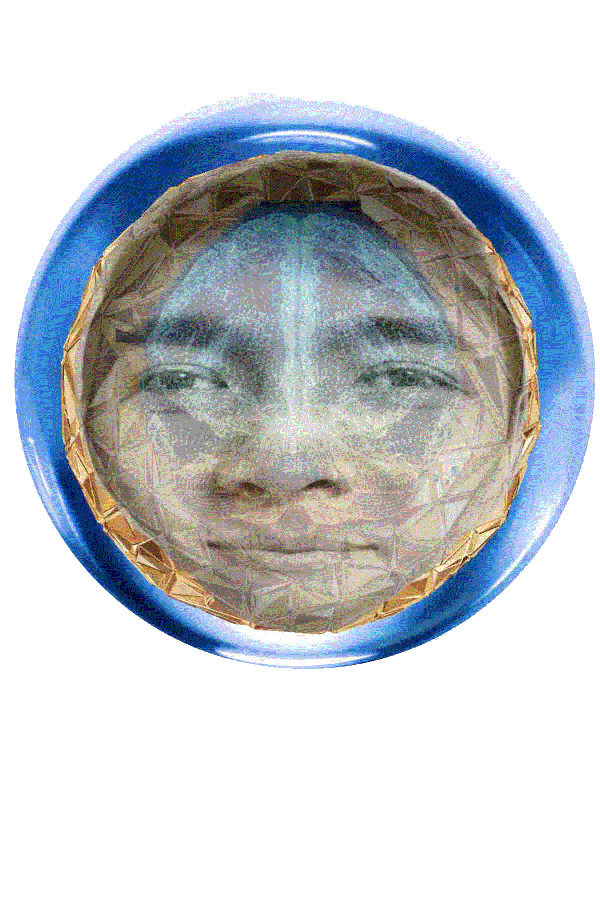
Timothy Francis Leary October 22, 1920 – May 31, 1996. I thought he would be especially interested in returning to life as a Wonderball since he once considered having his head cryogenically frozen after he died.